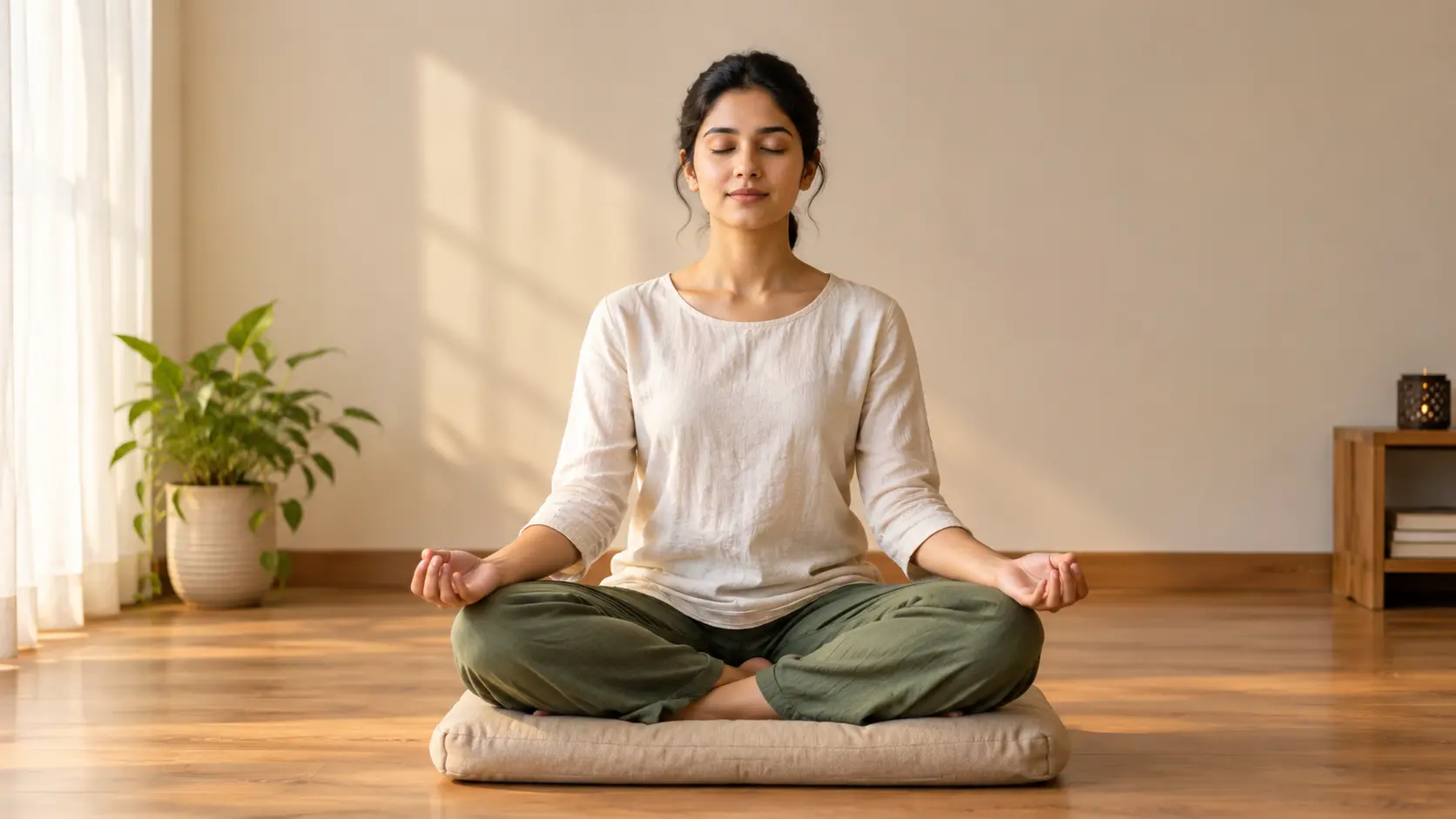
Breathing is the most accessible tool for quieting the mind and settling the body. Simple breathing exercises require no equipment and can be done almost anywhere. They work by gently influencing the nervous system and creating space between thoughts. These practices are calm and undemanding. Start with one exercise and practise it for a few days before adding another.

The Basic Slow Breath
Sit or stand in a comfortable position with a straight yet relaxed spine. Inhale gently through the nose for a count of four. Exhale slowly through the nose or mouth for a count of six. Keep the breath smooth and quiet without forcing. Repeat for one to three minutes. This longer exhalation activates the body’s natural calming response. The mind often follows the breath into greater stillness. Practise this whenever tension begins to rise. Over time the slow breath becomes a reliable way to return to centre.
Box Breathing for Steady Focus
Inhale through the nose for a count of four. Hold the breath softly for a count of four. Exhale for a count of four. Hold empty for a count of four. Then begin the next inhale. Keep every part of the cycle equal and gentle. Continue for several rounds. Box breathing creates a sense of balance and mental clarity. It is useful before focused work or in moments of mild stress. The even rhythm gives the mind a simple pattern to follow. Practise it seated or standing with eyes open or closed.
The Physiological Sigh
Take a full inhale through the nose. At the top of the breath take a second shorter inhale to fully expand the lungs. Then release a long slow exhale through the mouth. Repeat two or three times. This pattern helps release residual tension in the body. It is especially helpful when feeling overwhelmed or restless. The double inhale followed by a long exhale can shift the internal state within a minute. Use it as a quick reset during the day. No counting is required — just the natural rhythm of the sigh.

Breathing with a Hand on the Belly
Place one hand lightly on the abdomen. Inhale so that the hand rises gently with the breath. Exhale and feel the hand lower. Keep the chest relatively still. This encourages deeper diaphragmatic breathing. It is a quiet way to reconnect with the body and reduce shallow chest breathing. Practise for a few minutes while sitting or lying down. The physical feedback of the hand makes the breath more conscious and grounded. Many people find this form especially calming before sleep.
Counting the Breath for Mental Quiet
Inhale and silently count “one”. Exhale and count “two”. Continue up to ten then begin again at one. If the mind wanders simply return to the next number without judgment. This gentle counting gives the mind a light focus and reduces mental chatter. It can be done with eyes open or closed. Practise for five minutes when the mind feels busy. The structure of counting provides just enough engagement to settle scattered thoughts. Over time the gaps between thoughts may feel wider and more peaceful.
Alternate Nostril Breathing for Balance
Sit comfortably and use the right thumb to gently close the right nostril. Inhale through the left nostril. Close the left nostril with the ring finger and release the thumb. Exhale through the right nostril. Inhale through the right then switch and exhale through the left. Continue this alternating pattern for several rounds. Keep the breath slow and even. This practice is traditionally used to create a sense of inner balance. It can feel centering before meditation or after a busy period. Move the fingers softly and without strain.

Breathing While Walking
Coordinate the breath with gentle steps. Inhale for three or four steps and exhale for three or four steps. Adjust the count to a comfortable natural rhythm. This combines movement with breath awareness and is useful when sitting still feels difficult. The walking breath can turn a short stroll into a moving form of calm. Practise it outdoors or indoors. The dual focus on steps and breath anchors attention in the present moment.
Ending the Practice Softly
After any breathing exercise sit quietly for a few breaths without controlling the rhythm. Notice any changes in the body or mind. This short integration allows the effects to settle. Avoid rushing back into activity. A gentle close makes the practice feel complete and nourishing. Over time these brief pauses become a valued part of the day.
Conclusion
Simple breathing exercises offer a direct and portable way to influence state of mind and body. They require only attention and a few moments of willingness. When practised regularly the breath becomes a trusted companion for calm and clarity. These quiet techniques support emotional balance and mental presence without complexity. The most effective practice is the one that feels natural enough to return to often.
FAQs
How often should I practise?
A few minutes once or twice a day is a good starting point.

What if I feel light-headed?
Slow the breath and return to a natural rhythm — never force.
Can these be done around other people?
Yes — most can be practised quietly without drawing attention.
Is one exercise enough?
Yes — consistency with a single method is more valuable than variety.
When is the best time to practise?
Any time tension rises or as a short daily ritual morning or evening.