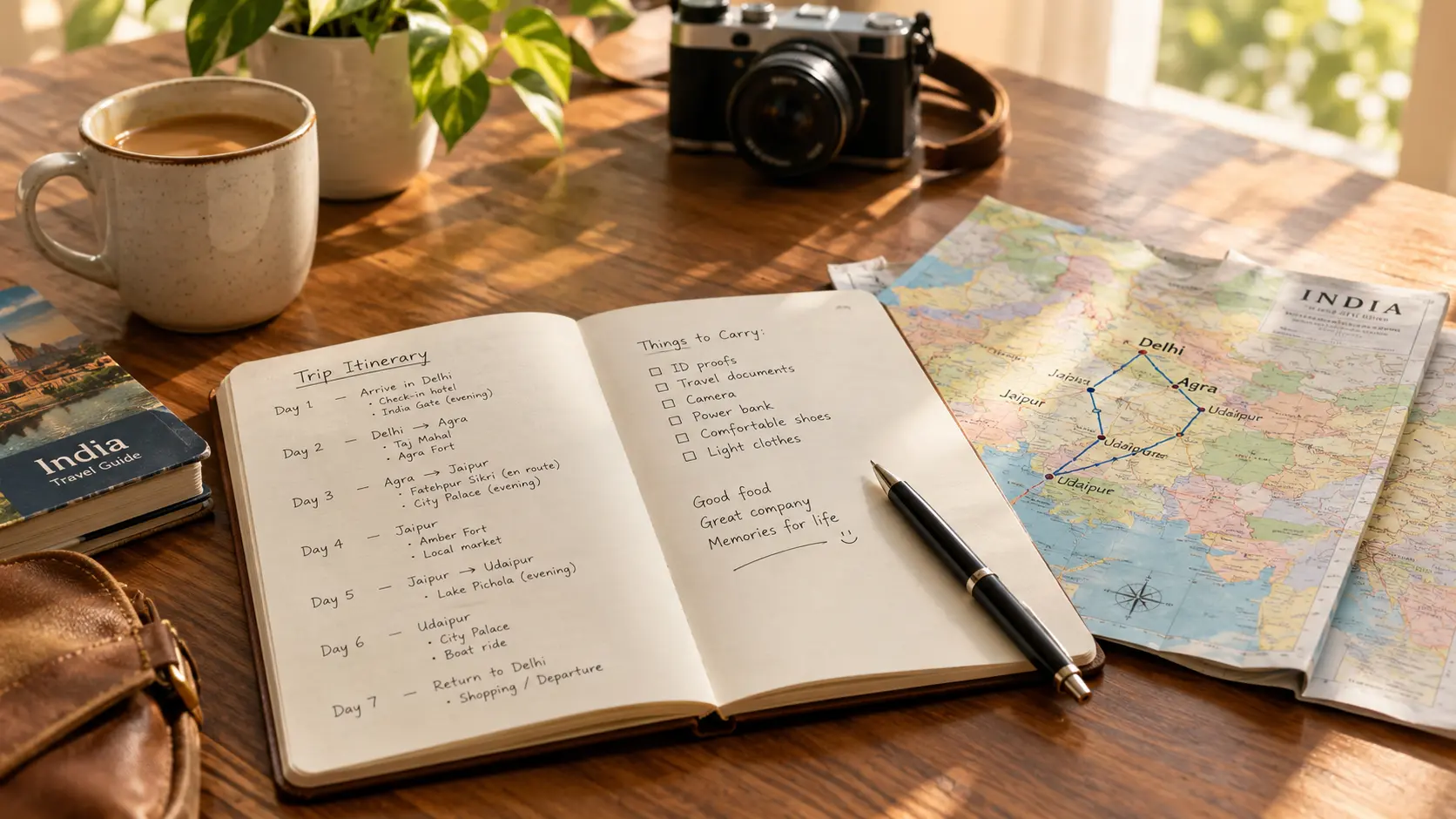
A travel itinerary works best when it provides gentle structure without becoming rigid. It helps the journey feel prepared while still leaving room for discovery and rest. Creating one does not require complicated tools or exhaustive detail. These simple steps support a calm and useful plan. The process works for short trips and longer journeys alike.

Begin with the Main Purpose
Decide what matters most about the trip. It might be rest, scenery, specific places, or time with people. Write this purpose in one clear sentence. This becomes the filter for later decisions. When choices arise the purpose helps determine what belongs and what can be left out. A clear intention keeps the itinerary focused and prevents it from filling with activities that do not serve the journey.
List the Fixed Points First
Note any flights, train times, hotel check-ins, or pre-booked experiences. These fixed points form the skeleton of the plan. Place them on a simple timeline or list by day. Everything else can arrange itself around these anchors. Knowing the non-negotiable elements reduces uncertainty. The remaining time becomes available for flexible choices rather than constant decision-making.
Group Activities by Location
Cluster places that are near each other on the same day or half-day. This reduces travel time and creates a more relaxed pace. Moving back and forth across a city or region often adds fatigue. Looking at a map while planning helps reveal natural groupings. Efficient geography supports a calmer experience on the ground. The itinerary feels smoother when locations flow logically.

Leave Open Space Each Day
Resist the urge to fill every hour. Include free time for rest, spontaneous discoveries, or simply sitting somewhere pleasant. Open space prevents the trip from feeling like a series of appointments. Many memorable moments arise when there is room for them. A lighter schedule also absorbs delays without stress. Building in breathing room is one of the most valuable parts of planning.
Balance Activity and Recovery
Alternate more demanding days with quieter ones. A full day of walking or travel is best followed by a slower pace. Notice personal energy patterns and plan accordingly. Including time for meals without rushing supports both enjoyment and stamina. The itinerary should sustain the traveller rather than exhaust them. Balance keeps the entire journey more pleasant.
Note Practical Details Lightly
Record addresses, confirmation numbers, and any necessary transport links in one place. Keep this information accessible but separate from the main flow of the day. A small section at the end of each day or a dedicated notes page works well. Overloading the daily plan with every detail can make it feel heavy. Practical information should support the day rather than dominate it.

Stay Flexible with Timing
Treat start times and durations as approximate rather than exact. Conditions on the ground often differ from expectations. A flexible approach allows adjustment without the sense that the plan has failed. Some places deserve more time than anticipated while others can be passed more quickly. The itinerary serves the experience rather than the reverse.
Review and Simplify
Once a draft exists look through it and remove anything that feels obligatory rather than wanted. A shorter clearer plan is usually more useful than a dense one. Check that the overall pace matches the original purpose of the trip. Simplification often improves the quality of the days. The final version should feel supportive when read through.
Share or Keep Private as Needed
Some travellers prefer to share the outline with companions or family. Others keep it private. Either approach works. If travelling with others agree on the main structure while allowing individual free time. Clear communication prevents misunderstandings about expectations. The itinerary can be a shared reference or a personal guide.
Conclusion
Creating a travel itinerary is an act of gentle preparation rather than rigid control. It provides enough structure to feel secure while leaving space for the journey to unfold naturally. When the plan remains light and purposeful the days feel both organised and open. These simple steps produce an itinerary that supports calm attention and genuine presence. The best plans hold the trip lightly so the experience itself can take centre stage.

FAQs
How detailed should the itinerary be?
Enough to feel prepared yet open enough to allow changes on the ground.
Should I book everything in advance?
Book the essentials and leave some days or meals flexible.
What if plans change during the trip?
Adjust the remaining days without treating the original plan as fixed.
Is a digital or paper itinerary better?
Either works — choose the format that feels easiest to access and update.
How many activities per day are reasonable?
One or two main focuses plus free time usually feels sustainable.