A short daily stretching practice helps the body feel more open and at ease. It requires no special equipment and can be done in a small space. These gentle movements support mobility and release the mild tension that builds from ordinary sitting and standing. Consistency matters more than intensity or duration. A few minutes each day create quiet cumulative benefits.

Begin with Soft Awareness
Stand or sit comfortably and take a few slow breaths. Notice any areas that feel tight without trying to change them immediately. This brief check-in helps the practice stay responsive rather than automatic. The body often holds tension in the neck shoulders hips and lower back. Beginning with awareness makes the stretches that follow more effective and kinder. It also creates a small transition into the routine.
Neck and Shoulder Release
Drop the right ear toward the right shoulder and hold for a few breaths. Switch to the left side. Then interlace the fingers behind the back or simply roll the shoulders slowly in both directions. These movements ease the upper body after screen time or desk work. Keep the motion gentle and within a comfortable range. The neck and shoulders often respond quickly to light attention. Repeat once or twice if the area still feels tight.
Spine and Chest Opening
Stand with feet hip-width apart and interlace the fingers behind the back. Softly straighten the arms and lift the chest. Alternatively clasp the hands behind the head and open the elbows wide while looking slightly upward. These positions counteract the forward posture common in daily life. Breathe steadily and avoid forcing the range. A small amount of opening is enough. Release slowly and notice the difference in the upper back and chest.

Forward Fold for the Back of the Body
From standing hinge at the hips and fold forward with soft knees. Let the head and arms hang heavily. Hold for several breaths allowing the spine to lengthen gently. This position releases the lower back and the backs of the legs. Bend the knees as much as needed to keep the stretch comfortable. Rising slowly prevents dizziness. The forward fold is a simple way to create space along the entire back body.
Hip and Hip-Flexor Stretches
Step one foot forward into a gentle lunge and lower the back knee if comfortable. Keep the torso upright and breathe into the front of the hip. Switch sides after a few breaths. Alternatively sit and bring the sole of one foot against the opposite inner thigh for a seated hip opener. Hip mobility supports easier walking and sitting. These stretches feel particularly useful after long periods of stillness. Move slowly and stay within a pain-free range.
Hamstring and Calf Attention
Sit on the floor with one leg extended and the other bent. Hinge forward from the hips toward the extended leg while keeping the back long. Switch sides. For the calves stand facing a wall place one foot back and press the heel down. Tightness in these areas is common and responds well to regular gentle lengthening. Avoid bouncing. Steady breathing helps the muscles release more readily.

Side Body Stretch
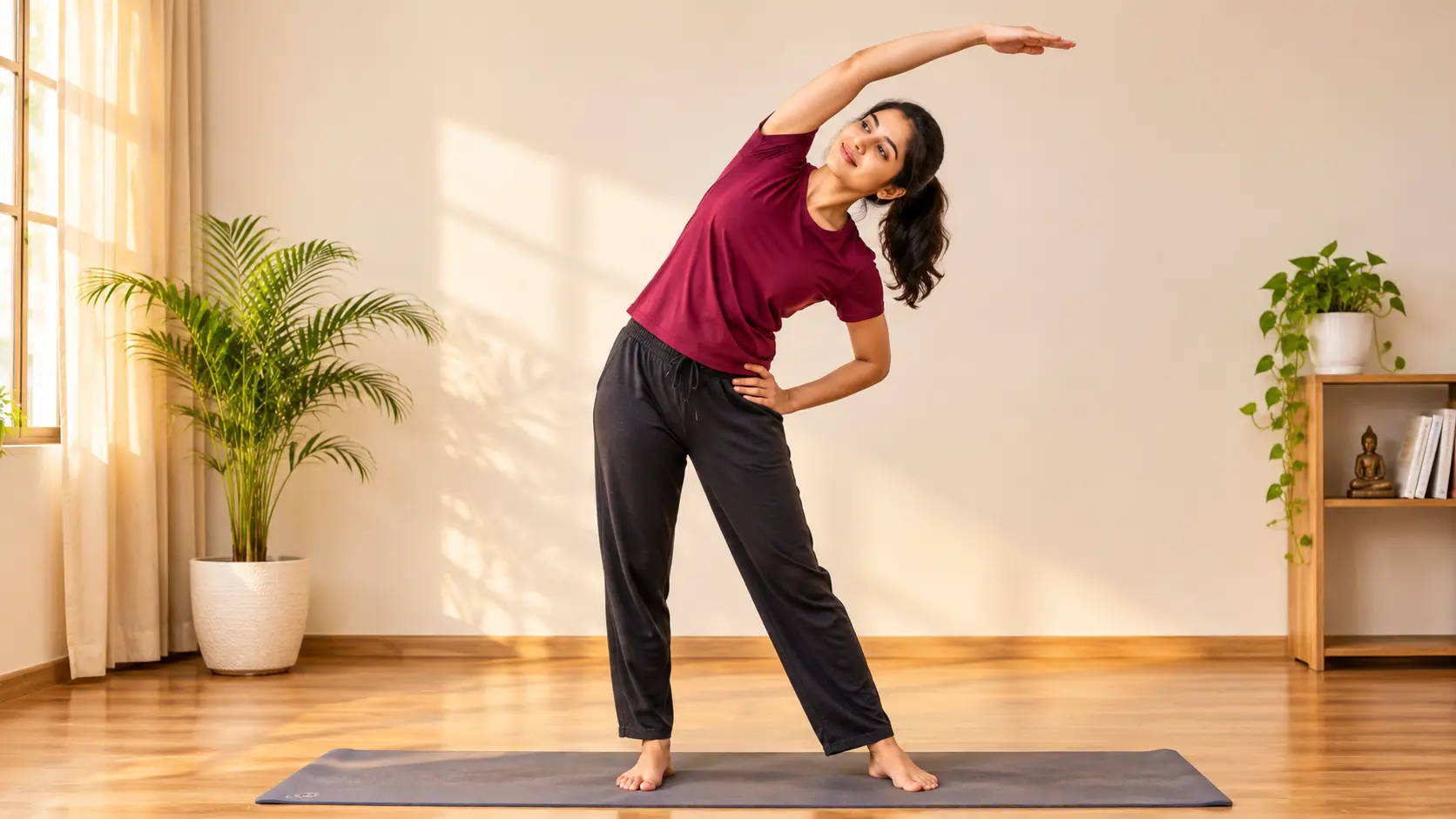
Stand or sit and reach one arm overhead then lean gently to the opposite side. Feel the length along the ribcage and waist. Switch sides after a few breaths. This movement creates space in the torso and can feel relieving after sitting. Keep both sitting bones grounded if seated. The side stretch is simple yet often overlooked. It adds balance to the routine.
Closing with Stillness
After the movements sit or stand quietly for a few breaths. Notice any changes in how the body feels. This short pause allows the effects of the stretches to settle. Avoid rushing immediately into the next activity. A calm close makes the practice feel complete. Over time the body begins to expect and welcome this daily attention.
Timing and Consistency
Five to ten minutes is enough for a useful daily routine. Morning practice can help the body feel ready for the day. Evening practice can release accumulated tension. Some people prefer a shorter version at both times. The best schedule is the one that can be maintained. Missing a day is not a problem — simply begin again the next day.
Conclusion
A daily stretching routine is a quiet act of care for the body. It supports ease of movement and reduces the mild stiffness that builds from ordinary life. When the practice stays gentle and consistent the benefits accumulate without strain. These simple movements require little time yet offer a reliable return in comfort and mobility. Stretching becomes a small daily conversation with the body rather than a demanding task.
FAQs
How long should the routine take?
Five to ten minutes is sufficient for most people.
Should I stretch before or after exercise?
Both can be useful — light movement before and longer holds after.
What if a stretch feels painful?
Ease out of it immediately and choose a milder version.
Do I need a yoga mat?
No — a carpet or clear floor space is enough.
Can I do this routine every day?
Yes — daily gentle stretching is generally beneficial.