
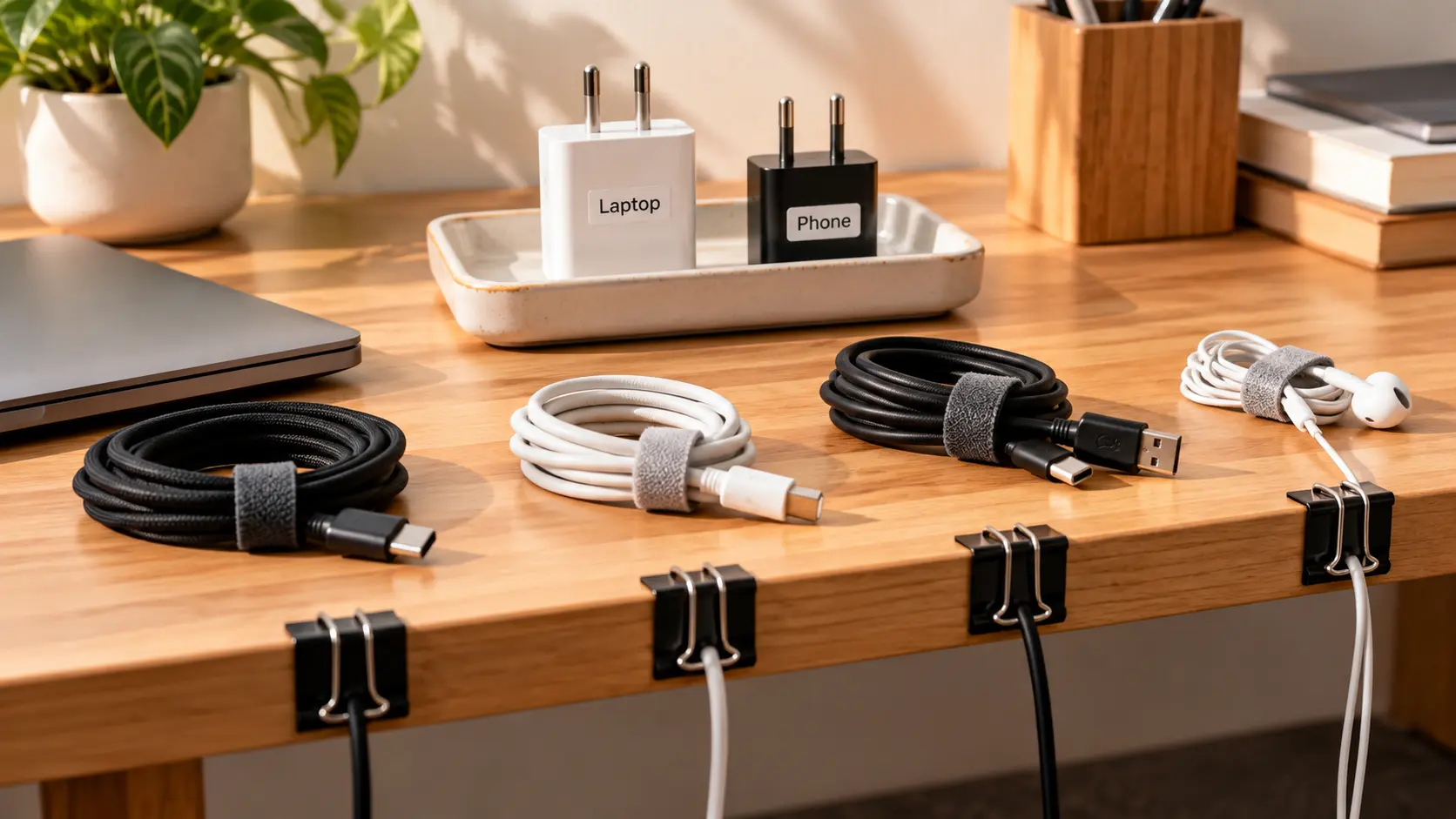
Cables and small electronics often create quiet visual noise in a home. A few simple habits and inexpensive solutions can bring order without much effort. These quick hacks focus on clarity and ease rather than perfect systems. They work in living rooms desks and bedside areas. Start with one or two that address the most visible clutter.

Unplug and Sort Everything First
Gather all loose cables chargers and small devices in one place. Unplug what is not in use and lay the items out so they can be seen clearly. Group similar cables together such as phone chargers laptop cords and audio cables. This initial sorting reveals duplicates and items that are no longer needed. Discard or recycle anything broken or unused. The process itself creates immediate visual relief and makes the next steps clearer.
Label Cables Simply
Use small pieces of masking tape or inexpensive cable labels to mark both ends of each cord. Write the device name in clear letters. Labelled cables are easy to identify later and prevent the frustration of testing every plug. This small step saves time whenever something needs to be moved or replaced. Keep the labels neat and consistent. Once labelled the cables become far less mysterious and more manageable.
Use Binder Clips or Clothespins
Clip cords to the edge of a desk or shelf with ordinary binder clips. The metal arms hold the cable in place and keep it from sliding out of reach. Clothespins can secure cords along the back of a table or the side of a nightstand. These household items cost little and require no installation. They keep frequently used cables accessible yet tidy. The method is reversible and leaves no marks.

Bundle with Soft Ties or Velcro
Gather excess length of each cable and secure it with a soft fabric tie or a reusable Velcro strap. Avoid tight rubber bands that can damage the cord over time. Bundling prevents tangles and makes the cable look intentional rather than messy. Store the bundled cords in a drawer or box when not in use. This habit keeps drawers from becoming nests of tangled wire. The result is calmer and easier to maintain.
Create a Charging Station
Choose one small tray or shallow box as a dedicated charging area. Place the most used chargers and devices there. A single power strip inside the tray keeps multiple plugs tidy. This central spot prevents chargers from migrating around the home. Devices return to the same place each evening. The station can sit on a desk shelf or bedside table. A calm dedicated zone reduces daily searching and visual clutter.
Route Cables Along Furniture Edges
Run longer cords along the back edges of desks or under the lips of shelves. Small adhesive clips or cable guides hold them in place out of sight. This keeps floors and surfaces clear while still allowing the cables to reach their destinations. Choose clips that match the furniture colour for a quieter look. The cables remain functional but no longer dominate the view. A few minutes of routing creates lasting visual calm.

Store Rarely Used Items Together
Place seasonal or infrequently used electronics and their cables in one clearly labelled box. Keep the box in a cupboard or on a higher shelf. This prevents occasional items from mixing with daily ones. When the item is needed the complete set of cables is already with it. The main living areas stay free of rarely touched devices. Review the box once or twice a year and release anything no longer required.
Keep a Small Tool Kit Nearby
Store a pair of scissors a few extra ties and a roll of tape in a small pouch near the main cable area. Having the tools at hand makes small adjustments easy and therefore more likely to happen. The kit prevents the need to search for supplies every time a cable needs attention. Over time the presence of the tools supports ongoing order. Maintenance becomes a quick and natural act.
Maintain with Weekly Glances
Once a week take thirty seconds to return stray cables to their places and re-bundle any that have loosened. This light habit stops clutter from rebuilding. Consistency with tiny actions is more effective than occasional large clean-ups. The system stays functional because it is never allowed to drift far. A calm electronics area becomes the normal state rather than a temporary achievement.
Conclusion
Organizing cables and electronics is a quiet act of care for the spaces we use every day. These quick hacks rely on simple tools and small habits rather than elaborate products. When cords and devices have clear places the home feels lighter and more restful. The visual calm supports focus and ease. A few minutes of thoughtful arrangement create lasting order.

FAQs
Do I need to buy special cable organizers?
No — household items like binder clips and Velcro ties work well.
How often should I reorganize?
A quick weekly check and a fuller sort every few months is usually enough.
What if I have many devices?
Create separate small zones for work personal and entertainment cables.
How do I deal with very short cables?
Keep them bundled and stored near the device they belong to.
Can these methods work in a shared space?
Yes — label clearly and agree on a few shared charging or storage spots.