Healthy hair often comes from quiet consistent care rather than elaborate products. Simple habits support the hair and scalp without overwhelm. These gentle tips work for most hair types and require little extra time. They focus on kindness and patience rather than quick fixes. Start with one or two changes and let them become natural.

Wash with Care and Less Frequency
Washing hair every day can strip natural oils and leave strands dry. Most hair benefits from washing two to three times a week. Use lukewarm water and a mild cleanser. Focus the product on the scalp and let the rinse clean the lengths. This softer approach keeps moisture in place and reduces frizz. Over time the scalp balances its own oil production. Hair feels less brittle and more manageable. If hair feels heavy between washes a light rinse with water alone can help. Gentle washing is one of the simplest ways to support long-term health.
Choose a Mild Cleanser
Look for formulas free from strong fragrance and harsh sulfates when possible. A gentle cleanser cleans without leaving the scalp tight or the hair squeaky. Apply a small amount and massage with fingertips rather than nails. Rinse thoroughly so no residue remains. This quiet step prevents irritation and dryness. Many people notice softer hair within a few washes. Keep the cleanser simple and consistent rather than switching often. The scalp responds well to steady mild care.
Condition the Lengths Softly
Apply conditioner mainly from the mid-lengths to the ends. These areas need more moisture and protection. Leave it on for a minute or two before rinsing with cool or lukewarm water. A light conditioner is often enough for fine hair while thicker hair may prefer a richer formula. Conditioning seals the hair surface and reduces tangles. It also makes detangling easier and gentler. This simple habit protects against breakage during daily handling.

Detangle with Patience
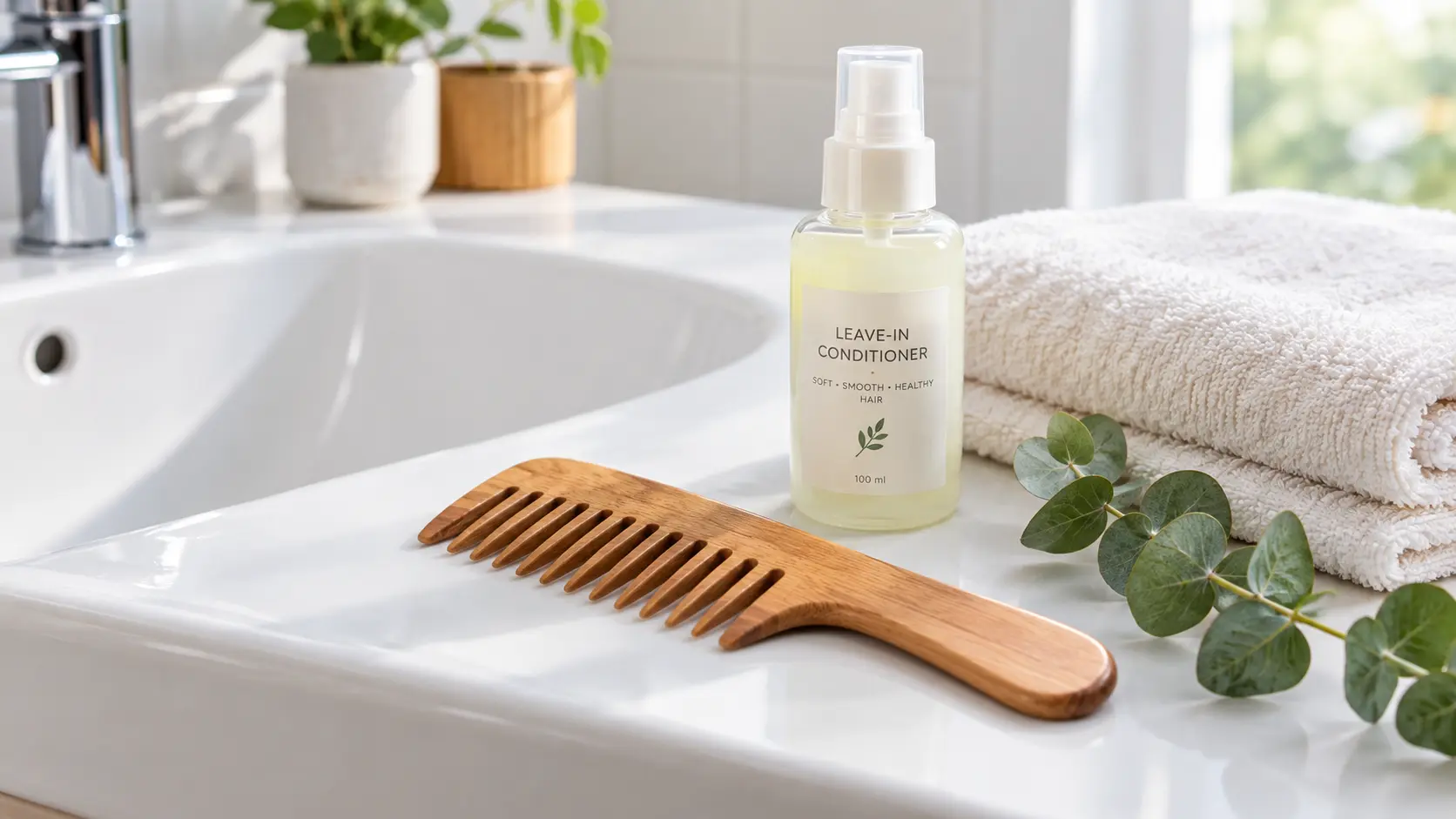
Never pull through wet hair with force. Use a wide-tooth comb or fingers starting from the ends and working upward. Apply a little conditioner or leave-in product if needed to ease the process. Wet hair is more fragile and breaks easily when rushed. Slow detangling prevents unnecessary damage and keeps strands longer and stronger. Make this a calm moment rather than a hurried task. Over time hair becomes easier to manage and less prone to split ends.
Protect Hair While Sleeping
Sleeping on a soft cotton or silk pillowcase reduces friction. Tying hair in a loose braid or bun keeps it from tangling overnight. Avoid tight styles that pull at the roots. These small night habits limit breakage and morning frizz. Hair wakes up smoother and needs less styling. The change is simple yet noticeable within a week or two. Protecting hair during sleep is a quiet form of overnight care.
Limit Heat and Handle with Care
High heat from dryers and tools can weaken hair over time. When heat is needed use the lowest effective setting and keep the tool moving. Allow hair to air dry whenever possible. Apply a light leave-in product before heat for soft protection. Reducing heat exposure helps hair keep its natural strength and shine. Many people find that less styling leads to healthier looking hair. Treat heat as an occasional tool rather than a daily necessity.
Trim Regularly and Gently
Split ends travel upward and make hair look dull. A small trim every eight to twelve weeks removes damaged ends and keeps the shape clean. You do not need a major cut — just a light refresh. Regular trims support the appearance of thickness and health. This simple maintenance prevents larger problems later. Find a rhythm that suits your hair growth and lifestyle.
Nourish from the Inside Quietly
Hair reflects overall wellbeing. Drinking enough water and eating a balanced variety of foods supports growth from within. Include sources of protein, healthy fats, and colourful vegetables when possible. No special supplements are required for most people. Steady everyday nourishment shows in stronger strands over months. This gentle internal support works alongside external care.
Avoid Tight Styles and Harsh Treatments
Constant tight ponytails or frequent chemical processes can stress the hair and scalp. Give hair rest days between protective styles. Choose softer elastics and looser holds. When colour or treatments are desired space them out and follow with extra conditioning. Reducing ongoing tension allows the hair to recover and grow more comfortably. Kind handling is one of the most effective long-term habits.
Conclusion
Simple hair care tips centre on consistency and gentleness rather than complexity. Small daily choices protect the hair and scalp without demanding extra time or products. When care feels calm and sustainable the results appear gradually as softer stronger hair. These quiet habits create a foundation of health that lasts. Hair responds best to steady kindness over time.

FAQs
How often should I wash my hair?
Two to three times a week is enough for most people.
Is daily conditioning necessary?
Yes for the lengths — it keeps hair soft and protected.
Can I air dry every day?
Yes and it is often gentler than regular heat.
What if my hair is very oily or dry?
Adjust washing frequency and choose a cleanser suited to your scalp.
Do I need many products?
No — a mild cleanser and conditioner are the essential base.