A small closet can still hold everything needed when the space is used with care and intention. Effective storage solutions focus on vertical height clear categories and easy access rather than filling every gap. These approaches keep the closet calm and functional without requiring permanent changes or expensive systems. The goal is a space that supports daily dressing rather than creating frustration. Start with what is already present and add only what solves a clear problem.

Use the Full Height of the Closet
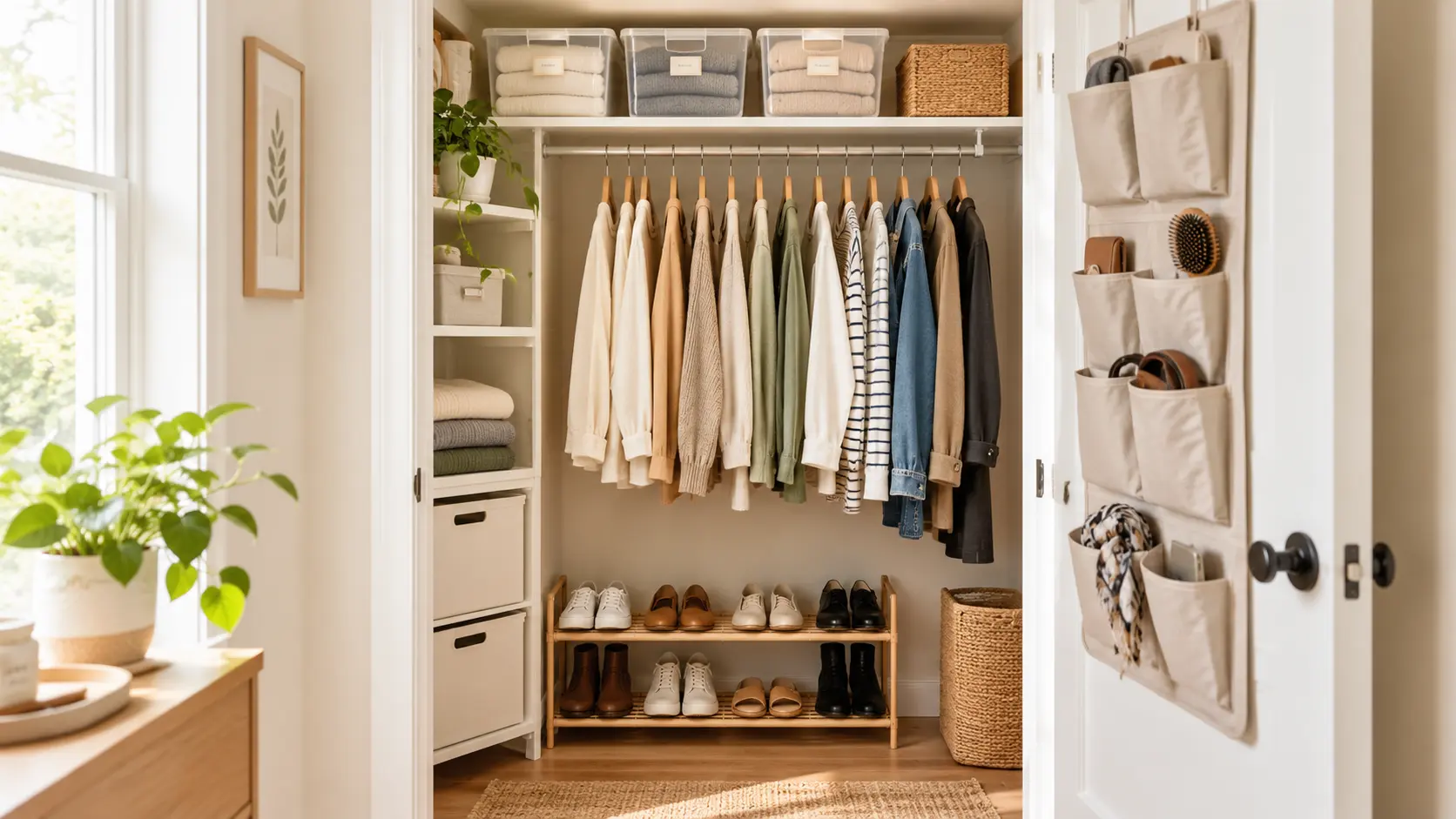
Most closets have unused space above the hanging rail and near the floor. Add a high shelf for items that are needed less often such as seasonal clothing or luggage. Place a low shelf or stackable drawers at the bottom for shoes or folded items. Vertical space is often the largest unused resource in a compact closet. Keeping the middle zone for everyday pieces makes the most frequent items easiest to reach. This simple division creates order without extra equipment.
Install a Second Hanging Rail
If the closet height allows a second lower rail can double the hanging capacity. Use the upper rail for longer items such as dresses and coats. Reserve the lower rail for shirts trousers and shorter garments. This arrangement keeps clothes visible and prevents them from being stacked too tightly. Tension rods or simple freestanding units can provide the second rail without tools in many cases. The result is more usable hanging space while maintaining a light appearance.
Add Slim Shelf Dividers or Cubes
Open shelves often become piles that collapse into each other. Slim vertical dividers or fabric cubes keep stacks of sweaters or jeans upright and separate. Each category stays in its own zone and is easier to retrieve. Choose dividers that match the shelf depth so they do not protrude. This small addition prevents the gradual mess that appears when folded items are left unsupported. The closet remains neater with almost no daily effort.

Use the Inside of the Door
The back of the closet door offers valuable vertical space. Over-door hooks or a slim rack can hold scarves belts bags or next-day outfits. This area is ideal for items that are used regularly yet do not need full hangers. Keep the arrangement light so the door still closes easily. Using the door frees rail and shelf space for clothing. It is one of the simplest ways to gain storage without changing the closet structure.
Choose Matching Slim Hangers
Uniform slim hangers create more space between garments and give a calmer visual effect. Velvet or thin plastic hangers grip clothes and prevent them from slipping. Replacing bulky hangers with a matching set immediately increases capacity and order. Group similar items together once they are on consistent hangers. The closet looks more intentional and clothes are easier to slide along the rail. This change is inexpensive and reversible.
Store Shoes in Clear or Open Containers
Shoes placed directly on the floor often create clutter and make cleaning difficult. Use clear boxes low shelves or an over-door shoe organiser to keep pairs visible and protected. Stackable options work well when floor space is limited. Keeping shoes contained prevents them from spreading into the main walking area of the closet. Seeing each pair at a glance also reduces the time spent searching. A dedicated shoe zone supports overall order.

Keep a Small Donation or Rotation Box
Place a compact box on a high shelf for items that no longer fit or are rarely worn. When the box is full the contents can be reviewed and released. This prevents the closet from slowly filling with unused pieces. A light seasonal rotation of clothing into and out of storage also helps. The box becomes a quiet decision point rather than a source of guilt. Maintaining this habit keeps the active wardrobe relevant and manageable.
Limit What Enters the Closet
Before adding new items consider whether they have a clear place and purpose. A small closet works best when every piece earns its space. Regular gentle editing is more effective than continuous expansion of storage. When the total volume of clothing stays reasonable the existing solutions remain sufficient. This mindset prevents the need for ever more organisers. A restrained approach supports long-term calm.
Maintain with Weekly Moments
Spend a few minutes once a week returning stray items to their places and checking that stacks remain tidy. This light habit stops disorder from building. Consistency with small actions is more effective than occasional large reorganising sessions. The closet stays functional because it is never allowed to drift far from order. A calm storage space becomes the normal state rather than a temporary achievement.
Conclusion
The best storage solutions for small closets create clarity and ease rather than maximum density. Using vertical space consistent hangers and simple containers turns a limited area into a supportive one. When every item has a logical place getting dressed becomes quieter and faster. These approaches require little expense yet produce lasting order. A small closet can feel generous when it is arranged with care and restraint.

FAQs
Do I need to buy a full closet system?
No — simple additions like slim hangers and shelf dividers are usually enough.
How often should I edit the contents?
A light review every few months and a fuller edit once or twice a year works well.
What if the closet has no shelves?
Freestanding shelves or hanging organisers can add levels without permanent installation.
Are clear containers better than opaque ones?
Clear containers make contents visible which is helpful in small spaces.
Can these ideas work in a shared closet?
Yes — create clear zones for each person and agree on shared categories.