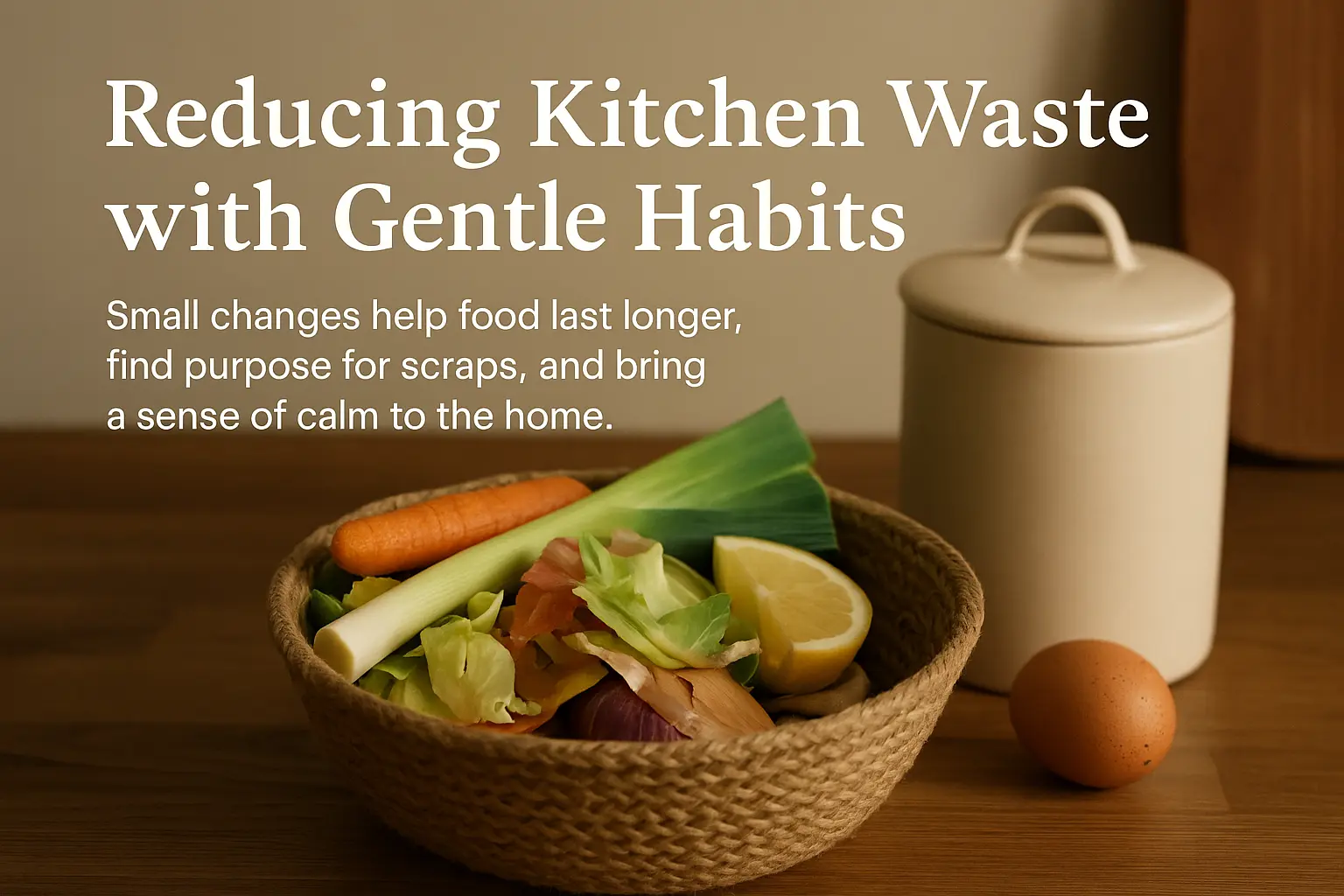
Kitchen waste often feels like a quiet guilt that builds over time.
When you approach it with small, thoughtful changes instead of strict rules, the bin becomes lighter and the home feels calmer. These gentle habits help food last longer, scraps find purpose, and the whole kitchen breathe more easily — all without extra effort or expense.
Plan Meals Around What You Already Have
Before shopping, open the fridge and pantry and note what needs to be used soon.
Build one or two meals around those items — a leftover vegetable stir-fry or a simple soup.
This small habit naturally cuts waste and makes cooking feel like a gentle continuation instead of a fresh start.
Store Food in the Right Places
Keep fruits and vegetables separate — apples and bananas speed up ripening of others.
Store herbs in a glass of water like flowers, and wrap leafy greens in a slightly damp cloth.
Cooler spots in the fridge — like the middle shelf — keep dairy and meat fresher longer.

Use Every Part of Vegetables and Herbs
Save onion skins, carrot tops, and celery leaves in a bag in the freezer for stock.
Turn broccoli stems into slaw or roast them with olive oil.
A little care turns what once went in the bin into quiet flavor.
Freeze Before It Spoils
Portion bread, cheese, cooked grains, and even milk into small bags or containers.
Label with the date so you know at a glance.
Frozen items stay good for months and become ready-made ingredients for busy days.

Cook Only What You Will Eat
Make smaller batches or halve recipes when cooking for one or two.
Leftovers are wonderful, but only when they are eaten within two or three days.
A gentle rule: if it is not eaten in three days, freeze it.
Repurpose Leftovers Thoughtfully
Turn yesterday’s rice into fried rice, yesterday’s bread into croutons, and yesterday’s chicken into soup.
Keep a small notebook of favorite leftover ideas — it makes the next meal feel like a quiet gift.
Compost What Cannot Be Eaten
Vegetable peels, coffee grounds, eggshells, and wilted herbs belong to the earth.
A small countertop compost bin or freezer bag keeps smells away until collection day.
Even in a flat, a tiny bin under the sink works beautifully.
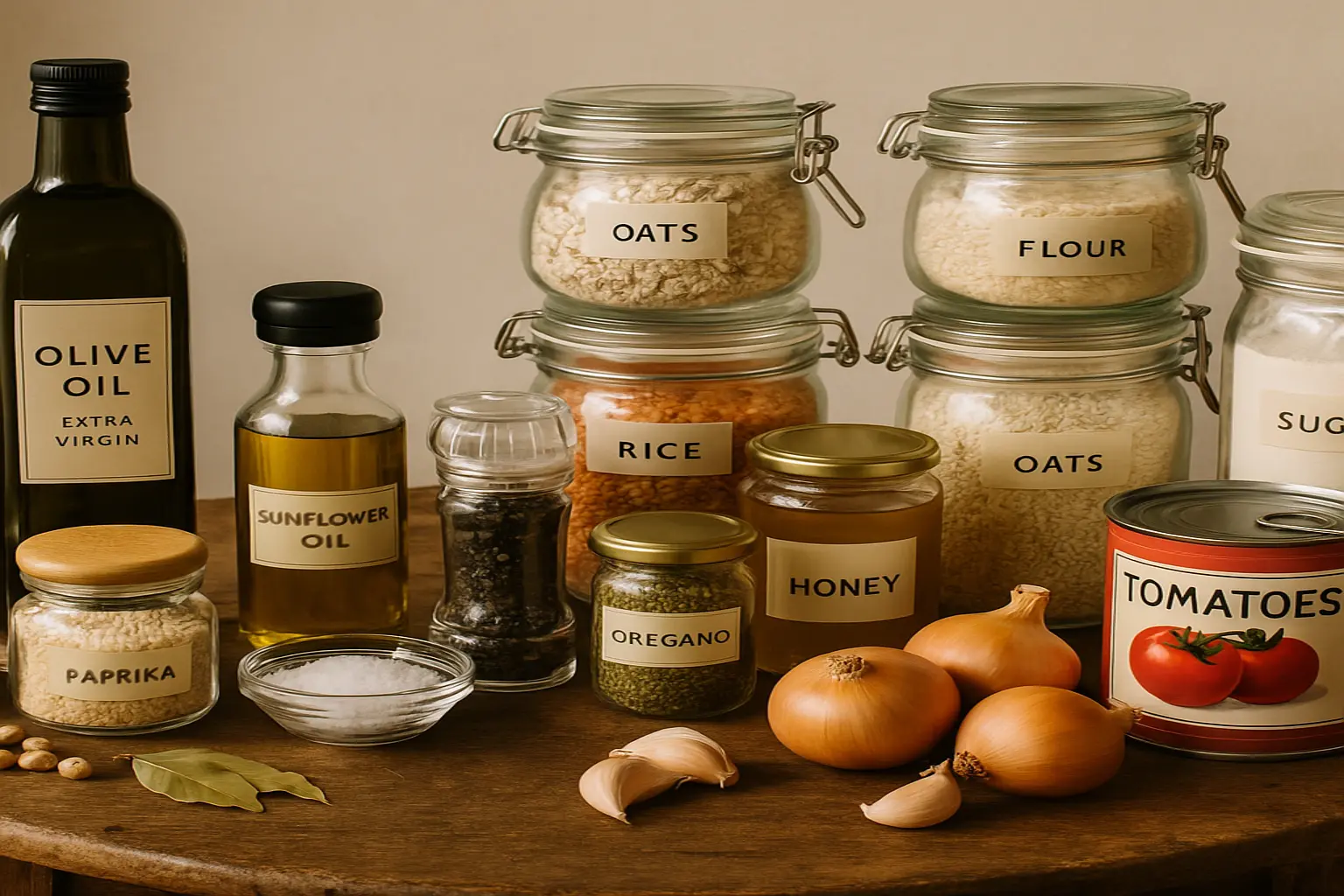
Shop with Reusable Bags and Containers
Bring your own bags and ask for loose produce instead of plastic-wrapped.
For bulk items like nuts or grains, use your own jars.
This simple step reduces packaging waste without changing your routine.
Conclusion
Reducing kitchen waste is not about perfection or counting every scrap.
It is a quiet practice of care — noticing, using, and giving back what you can.
Over time the bin grows lighter, the meals feel warmer, and the home settles into a gentle rhythm of enough.
FAQs
Q. What if I always buy too much produce?
A. Shop for only three days at a time — fresh is easier to use gently.
Q. Can I freeze cooked food?
A. Yes — most soups, stews, and casseroles freeze beautifully for three months.
Q. How do I start composting without a garden?
A. Use a small countertop bin or take scraps to a local community collection.
Q. Is it worth saving scraps for stock?
A. Even a small amount adds gentle depth to soups and sauces.
Q. What about expired dairy?
A. Smell and taste first — many items last longer than the date suggests.